Income Protection Insurance Premium: What Affects Your Price
There is no standard income protection insurance premium that suits every New Zealander. Two people earning similar incomes can receive very different pricing depending on their age, occupation, health, smoking status and the way their cover is structured. Even small changes to a waiting period, benefit period or monthly benefit can change what you pay.
That is why it makes more sense to compare the cover behind the price rather than searching for the cheapest number. This guide explains what affects premiums in New Zealand, where you may be able to reduce costs and how to compare options on a like-for-like basis.
TL;DR: Income Protection Premiums in NZ
- Income protection pricing can be influenced by your age, occupation, health, smoking or nicotine use, monthly benefit, waiting period, benefit period and premium structure.
- A cheaper quote is not automatically better value. Compare the same benefit amount, waiting period, benefit period and important policy terms before deciding.
- If you cannot work because of a covered injury, ACC’s weekly compensation guidance explains how weekly compensation may work for eligible employees in New Zealand.
- Inland Revenue’s guidance on non-business expenses says the cost of income protection cover may be claimable where the resulting insurance payout would be taxable. The tax treatment depends on the particular policy and circumstances.
- The Financial Markets Authority’s insurance advice guidance recommends considering affordability, premiums, cover, definitions and exclusions when assessing insurance rather than looking at price alone.
- The best comparison is one based on the protection you actually need and a premium you can realistically maintain.
Ready to look at your options side by side? Compare Now
What Is an Income Protection Insurance Premium?
An income protection insurance premium is the amount you pay to keep your cover in place. Depending on how your policy is arranged, you may pay monthly, fortnightly or at another agreed frequency.
It is important not to confuse the premium with the monthly benefit. Your premium is the cost of the insurance. The benefit is the amount an eligible claim may pay if illness or injury prevents you from working, subject to your policy terms.
| Term | What it means |
| Premium | What you pay for the insurance |
| Monthly benefit | The amount an eligible claim may pay |
| Waiting period | How long you generally wait before benefits can begin |
| Benefit period | The maximum period eligible benefits may continue |
| Premium structure | How your premium is designed to change over time |
An online estimate or initial quote may also differ from the final terms offered. Your health, occupation, medical history and other underwriting information can influence the eventual price, exclusions or conditions attached to the cover.
How Much Can an Income Protection Insurance Premium Cost in NZ?
There is no reliable single answer to how much an income protection insurance premium costs in New Zealand.
A headline figure such as “$X per month” means very little unless you know the assumptions behind it. A useful quote should be considered alongside factors such as:
- age
- occupation and actual work duties
- smoking or nicotine status
- monthly benefit
- waiting period
- benefit period
- health information
- premium structure
For example, someone doing predominantly office-based work with a longer waiting period may receive different pricing from a person of the same age and income doing heavy physical work with a shorter waiting period.
That does not mean one option is automatically better. The important question is whether the price reflects cover that would actually work for you if you could not earn your usual income.
What Affects Your Income Protection Insurance Premium?
1. Your age
Age is one of the factors used when pricing income protection. Starting cover earlier may result in a different initial price than applying later in life, although age is only one part of the calculation.
The way premiums change as you get older can also depend on whether the cover uses a stepped, level or other premium structure.
2. Your occupation and duties
Your occupation can make a significant difference because different types of work carry different risks.
Someone working mainly at a desk may be assessed differently from someone who regularly works at heights, operates heavy machinery, drives extensively or performs physically demanding tasks.
Your actual duties matter too. Two people with similar job titles may perform very different work, which is why accurate occupation information is important when requesting comparisons.
3. Health and medical history
Your current health, previous medical conditions, injuries, medications and investigations may affect underwriting.
Depending on the circumstances, an application may be accepted on standard terms, offered with altered terms, include exclusions or attract an additional premium. Outcomes vary, so it is better to compare actual offers rather than assume a medical condition automatically makes cover unavailable.
4. Smoking and nicotine use
Smoking and other nicotine use may influence pricing and underwriting. Definitions can vary, so answer application questions accurately rather than assuming a particular product is treated the same way everywhere.
5. Your monthly benefit
Generally, requesting a larger insured monthly benefit means paying more for the cover.
Instead of automatically choosing the maximum available amount, think about the income gap your household would actually need to cover.
Start with essential expenses such as your mortgage or rent, food, utilities, debt repayments and family costs. Then consider sick leave, savings, household income and other financial support that may remain available.
6. Your waiting period
The waiting period is the period you generally need to remain unable to work before an eligible benefit can begin.
A shorter waiting period usually means the policy may start paying sooner, which can increase the premium. A longer waiting period generally reduces the price, but it also means you need enough savings, sick leave or other resources to cover your expenses for longer.
Our guide to choosing the right income protection waiting period explains this trade-off in more detail.
7. Your benefit period
The benefit period determines how long eligible payments may continue.
A shorter benefit period can reduce premiums, but your protection also ends sooner if you remain unable to work. Longer benefit periods generally provide greater long-term protection but may cost more.
For a deeper comparison, read our guide on choosing an income protection benefit period.
Once you understand which settings are affecting the price, it becomes much easier to compare meaningful alternatives. Compare Now
Stepped vs Level Premiums: Why Future Cost Matters
The lowest price today may not remain the cheapest over the period you expect to hold your cover.
With a stepped premium structure, pricing is generally designed to increase as you get older, alongside any other applicable changes. This can mean a lower starting premium but potentially higher costs later.
Level-style premiums are generally designed to reduce or remove some age-related increases from the level component of the premium. They may start higher.
However, “level” should not be interpreted as a guarantee that the total amount you pay can never change. Policy alterations, benefit increases, indexation, fees or permitted repricing can still affect the amount.
When comparing the two approaches, think beyond year one. Consider what the premium could mean for your budget five, ten or more years from now and how long you realistically expect to maintain the cover.
How to Compare Income Protection Premiums Properly
The biggest mistake when comparing quotes is putting two different policies side by side and judging them only by price.
Compare the income protection insurance premium only after checking that the important settings are reasonably equivalent.
Try to keep the following consistent:
- monthly benefit
- waiting period
- benefit period
- occupation information
- smoking status
- premium structure
- optional features
- indexation settings where applicable
Then look beyond the dollar figure.
Policy definitions, exclusions, partial disability benefits, offsets from other income, claim requirements and other features can affect the value you receive.
A useful comparison might look like this:
| Lower-cost choice | Potential trade-off |
| Longer waiting period | You fund your expenses for longer |
| Shorter benefit period | Payments may stop sooner |
| Lower monthly benefit | Greater potential income shortfall |
| Fewer optional features | Less additional protection |
| Lower starting premium | May not mean lower long-term cost |
The goal is not to make every setting as cheap as possible. It is to find a combination that fits your budget without creating a financial gap you would struggle to manage during a claim.
Want to see how different structures compare? Compare Now
How to Reduce Your Income Protection Insurance Premium
There are several ways you may be able to adjust your income protection insurance premium, but every reduction should be considered alongside the protection you give up.
Consider a longer waiting period
If you have substantial savings, paid sick leave or another reliable source of household income, you may be able to manage a longer period before payments begin.
Do the maths first. If your essential household expenses are $5,000 a month and you choose a three-month waiting period, you need to understand how those costs would be funded.
Review the monthly benefit
Your circumstances can change over time. You may reduce debt, build savings or have another household earner move into a stronger financial position.
Reviewing the amount you need to protect can help make sure you are not paying for more cover than your current situation requires.
Compare benefit periods
A shorter benefit period may reduce premiums, but it can create greater exposure during a long-term illness or disability.
Compare the monthly savings with the financial consequences if you were unable to return to work before payments ended.
Review optional benefits
Additional features can add value, but not every extra feature will be equally important for every person.
Understand what each addition does before deciding whether the extra cost is worthwhile.
Review your cover after major changes
Consider reviewing your protection if you:
- change occupation
- become self-employed
- experience a major income change
- substantially reduce your mortgage
- build significant savings
- have children or other dependants
- change household financial responsibilities
Importantly, do not cancel existing cover simply because another quote appears cheaper. New applications may be subject to fresh underwriting, and the terms available to you may have changed since your existing cover was arranged. The FMA also advises carefully considering benefits, exclusions and limitations when switching insurance.
Before reducing protection purely to cut the monthly price, compare the alternatives and their trade-offs. Compare Now
How Does ACC Fit Into the Comparison?
ACC is an important part of New Zealand’s financial protection system, but private income protection and ACC are not identical.
ACC weekly compensation may apply when an eligible person cannot work because of a covered injury. Ordinary illnesses do not automatically fall within the same framework.
Your income protection policy may also contain rules about how ACC payments or other income affect a claim. Check the wording rather than assuming benefits will simply be added together.
The practical approach is to identify what support you already have and then compare the remaining income risk you want private cover to address.
Are Income Protection Premiums Tax Deductible in NZ?
Tax treatment should not be assumed to be the same for every policy.
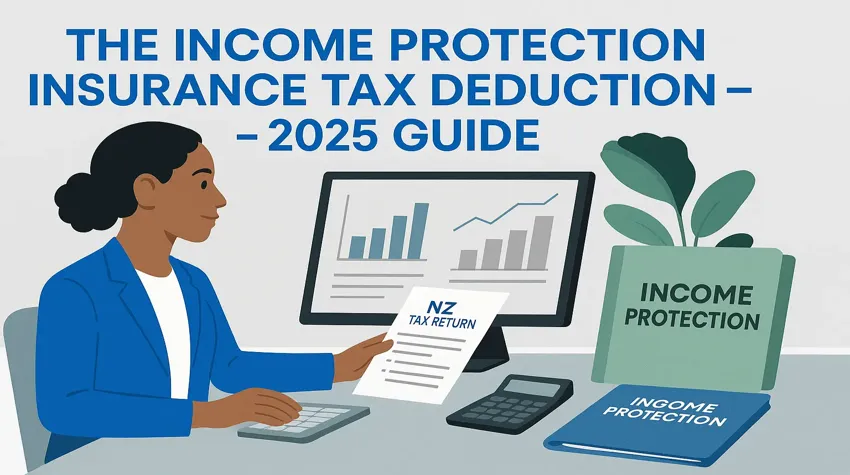
Inland Revenue states that the cost of income protection insurance can be claimed as a non-business expense where the insurance payout would be taxable. It also recommends checking with the insurer whether the particular cover is deductible.
Because product structures and individual circumstances vary, consider getting tax advice if deductibility is important to your decision.
What Should You Have Ready Before Comparing Quotes?
A comparison is more useful when each quote is based on consistent information.
Have these details ready:
- Your age.
- Occupation and actual duties.
- Employment status.
- Income.
- Preferred monthly benefit.
- Savings and emergency funds.
- Available sick leave.
- Preferred waiting period.
- Preferred benefit period.
- Smoking or nicotine information.
- Relevant health information.
- Existing financial protection.
Providing the same information for each comparison makes it easier to identify genuine differences rather than differences caused by inconsistent assumptions.
Finding the Right Balance Between Price and Protection
The right premium is not necessarily the lowest one.
A suitable income protection insurance premium should be considered alongside the financial protection it buys, how long you could manage without income and whether you could continue paying for the policy over time.
Compare price, but also compare waiting periods, benefit periods, policy terms and the consequences of choosing less cover.
If you are ready to see how different options may fit your income, work and budget, Compare Now.
Frequently Asked Questions
Q: What is a reasonable income protection insurance premium in New Zealand?
A: There is no universal reasonable price. What represents good value depends on your age, occupation, health, monthly benefit, waiting period, benefit period and policy structure. Compare equivalent cover rather than relying on a generic average.
Q: Does a longer waiting period reduce the premium?
A: Generally, a longer waiting period can reduce the cost because an eligible benefit would begin later. However, you need enough savings, sick leave or other resources to fund expenses during that period.
Q: Do premiums increase as I get older?
A: They can, particularly under stepped premium structures. Level-style structures work differently, but this does not necessarily mean the total amount payable can never change.
Q: Is income protection cheaper for office workers?
A: Occupation is one factor used in pricing, and predominantly office-based work may be assessed differently from physical or higher-risk duties. Age, health, benefit choices and other factors still influence the final quote.
Q: Should I choose the cheapest income protection quote?
A: Not automatically. First check whether the benefit amount, waiting period, benefit period, definitions, exclusions and other important features are comparable. A cheaper policy can represent poor value if the protection does not suit your needs.
Q: Can I reduce my premium without cancelling my cover?
A: Potential options may include reviewing your waiting period, benefit period, monthly benefit and optional features. Any change should be considered carefully because reducing the premium may also reduce protection.
Q: Are income protection premiums tax deductible?
A: They may be deductible where the resulting benefit would be taxable. The treatment depends on the policy, so check the particular cover and seek tax advice where appropriate.
Q: Does ACC make income protection unnecessary?
A: Not necessarily. ACC and private income protection serve different purposes and may respond differently depending on why you cannot work. Consider your existing ACC position when comparing the income gap you want to protect.
Q: How often should I review my cover?
A: Consider reviewing it after major changes to your income, occupation, debt, savings, family responsibilities or employment status. Regular reviews can also help you check whether the cover and premium remain suitable for your circumstances.